
Numbers
Separate thousands, show the unit beside every amount, and put the numbers people compare where they look first.
When to use
Use it on every number, amount, count and price a person reads, in a field, a card, a dashboard or a sentence.
When not to use
Every number follows these rules until an exception is agreed.
How it works
Separate thousands on every number
Every number and currency field shows a thousand separator. Use the regional format where the tool offers it, and the US format otherwise. The separator is field formatting; when the MCP cannot set it, hand it over to the person who builds the page.
Pass: 0 numbers of four digits or more appear without a separator.
- Replace this
- 1000
- With this
- 1,000
Show the unit or the period beside every amount
An amount carries what it counts or the period it covers.
Pass: every amount shows its unit or period beside it, so it still reads with the field label covered.
- Replace this
- 5000
- With this
- 5,000 / month
- Replace this
- 12
- With this
- 12 fl oz
Say what a price is for
A price shows the container or size it pays for. Where items are compared, it also shows the cost per smallest unit.
Pass: every price names what it is for, so two prices for the same item in different packs compare with 0 arithmetic.
- Replace this
- $24.00
- With this
- $24.00 per box, $0.50 per fl oz
Put the numbers people compare on the card
Amounts, counts, days overdue and percentages of a target sit on the card or row. They take a colour when they cross a threshold. The detail can show them as well.
Pass: the person ranks the rows by the number with 0 records opened.
Amount and Close date on every card, and a total on every stage column.
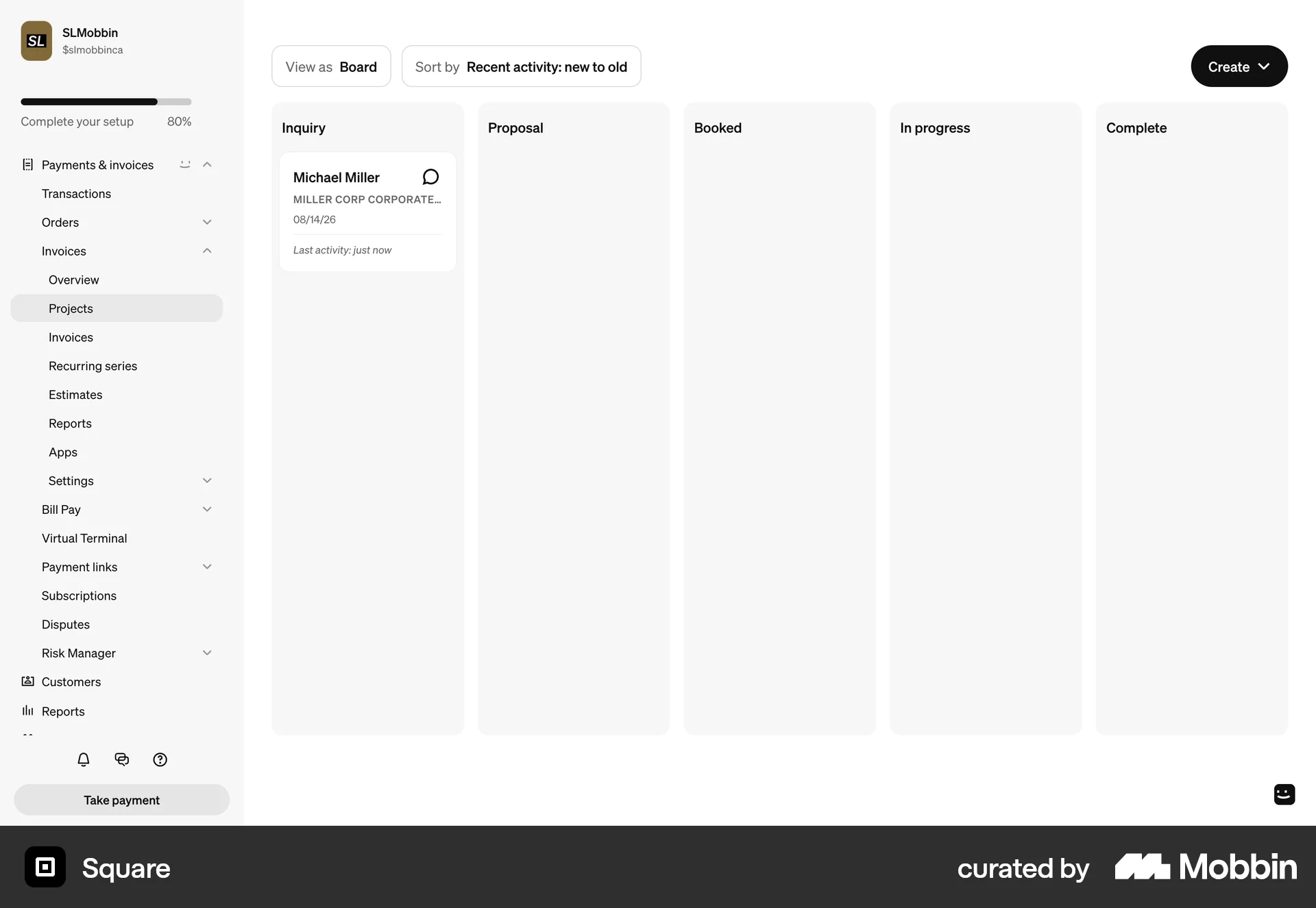
Square's project cards show the name and the date, with no amount.
Research
The amount on the card comes from the comparison’s deals boards, which show Amount and Close date on each card and totals on each stage column.
No outside source covers the other rules yet. They come from the reviewer’s feedback on an ordering system. The reviewer asked for a thousand separator everywhere (“1,000, not 1000, not 1.000”), for the container beside a count (“1 box, and 12 fl oz, versus, just 12”), and for every price to show what it is for and the cost “per smallest unit (meaning, all liquid would show like this: $0.50 per fl oz)”. The reviewer also asked to see “90% of Par” on the order card without opening the item. The price rule is not yet in the interface skill’s rule list.